
“Equity” and “inclusion” have become some of the most frequently used and frequently misused words in healthcare.
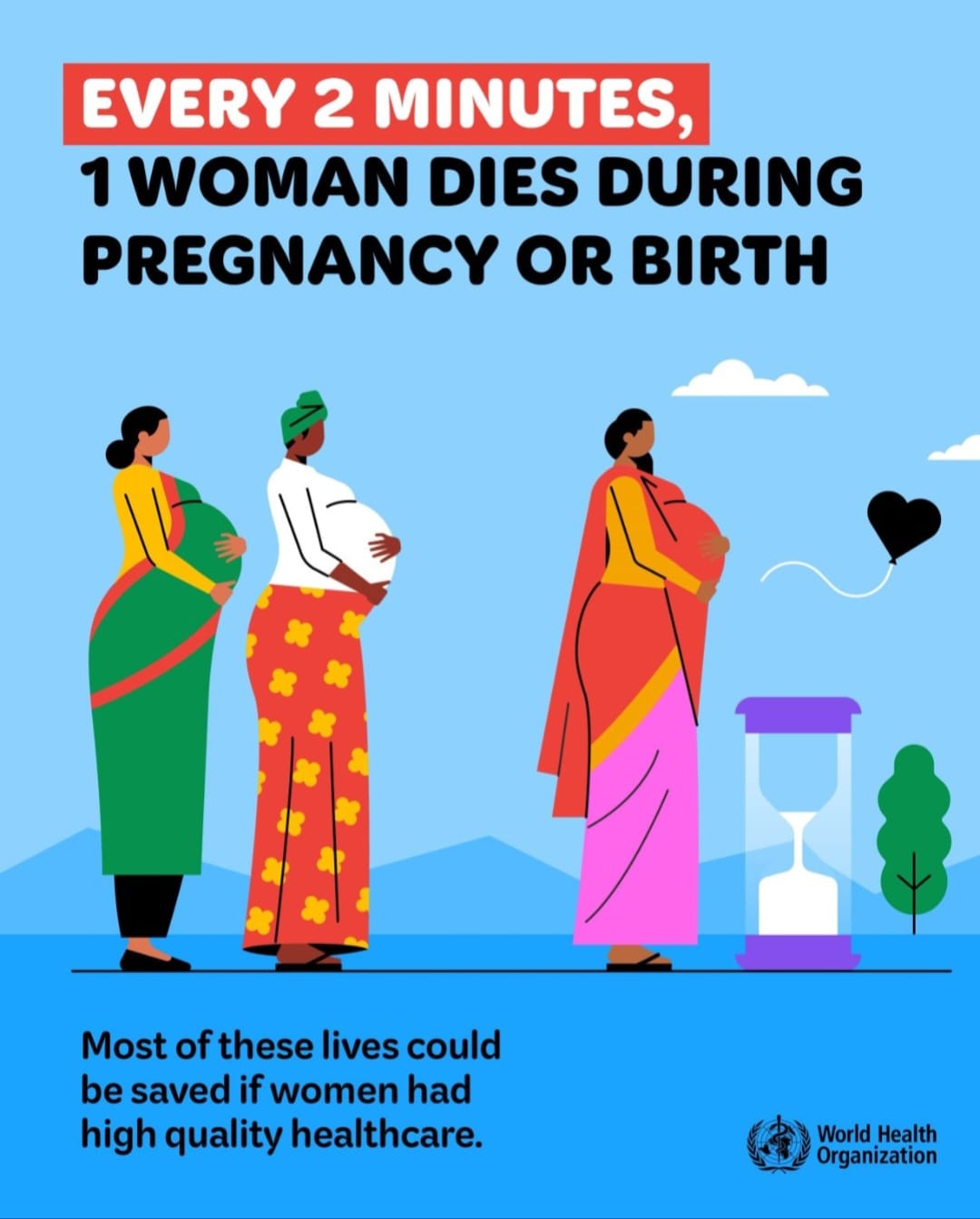
They appear in strategic plans, conference themes, organizational statements and funding applications. Yet for many mothers, especially Black women, newcomers, young mothers, low-income families and women navigating trauma, the experience of seeking maternal mental-health support remains profoundly unequal.
A healthcare institution cannot call itself equitable simply because it serves everyone.
Serving everyone equally assumes that every mother begins from the same position, faces the same barriers and has the same ability to find, afford and trust care. That is equality of availability not equity of access or outcome.
In maternal mental health, equity means recognizing that some mothers face additional barriers created by racism, financial hardship, language differences, immigration uncertainty, geographical isolation, disability, stigma, limited childcare and previous harmful experiences within healthcare systems.
Equity asks a more demanding question:
What must change so that every mother has a genuine opportunity to receive timely, respectful and effective mental-health support?
Inclusion is also more than inviting diverse women into an existing program.
A mother is not truly included when she is present but unheard. She is not included when professionals speak about her community without involving people who understand its realities. She is not included when services are technically available but culturally unsafe, unaffordable or impossible to attend because she has no transportation or childcare.
Inclusion means that mothers help shape the services intended to support them.
Within maternal mental-health advocacy, these words must become measurable actions.
Equity and inclusion should mean:
- Screening women consistently during pregnancy and throughout the postpartum period.
- Creating clear referral pathways so that screening leads to meaningful support.
- Providing culturally responsive and trauma-informed care.
- Offering affordable, accessible and community-based options.
- Removing language, transportation, scheduling and childcare barriers.
- Including mothers with lived experience in program design and evaluation.
- Collecting responsible, race-disaggregated data to identify who is being reached, who is being missed, and whose outcomes are not improving.
- Building accountability into healthcare institutions rather than placing the entire burden of advocacy on mothers.
- Recognizing community-based professionals, including doulas and peer-support workers, as important partners in the continuum of care.
Maternal mental-health inequity is not only an individual clinical issue. It is also a systems issue.
When a mother repeatedly asks for help but receives no meaningful follow-up, that is not inclusion.
When services exist but she cannot afford, understand or reach them, that is not equity.
When organizations collect her story for visibility but exclude her from decision-making, that is not empowerment.
And when “equity” appears in a mission statement without corresponding funding, representation, data or accountability, it becomes branding rather than transformation.
Through W.O.M.B Holistic Maternal & Family Wellness, my advocacy is grounded in a simple conviction: every mother deserves to be seen, heard, and supported not only in principle, but in practice.
We must move beyond asking whether a program is available.
We must ask:
Who can actually access it?
Who feels safe using it?
Who receives follow-up?
Who experiences better outcomes?
Who remains invisible in the data?
Equity is not giving every mother the same thing. It is ensuring that each mother receives the support required to have a fair opportunity to heal and thrive.
Inclusion is not merely giving women a seat at the table. It is ensuring that their knowledge, experiences and recommendations influence what is built, funded and changed.
The maternal-health sector does not need more fashionable language. It needs operational courage.
An Invitation to Participate
The W.O.M.B Equity Pilot Program is currently inviting eligible women to participate in a community-based initiative supporting women across fertility, pregnancy, childbirth, postpartum, maternal mental health and menopause.
This pilot is designed to make equity practical by providing support, listening to women’s experiences, and gathering responsible insights that can help strengthen future maternal and family wellness services.
If you are in London, Ontario, and believe you may benefit from this program or know someone who may, we invite you to visit our Participants page to learn more and explore your interest: click here.
Participation is voluntary, and expressing interest does not guarantee placement. W.O.M.B services complement but do not replace medical, psychiatric, or emergency care.
If we continue using “equity” and “inclusion,” those words must be visible in our budgets, workforce, policies, partnerships, service delivery and outcomes.
Anything less risks turning the language of justice into institutional decoration.
Serah Blessing
Founder, W.O.M.B Holistic Maternal & Family Wellness
Empowering Women, Empowering Generations
Website: www.wombhmfw.com
#MaternalMentalHealth #MaternalHealthEquity #BlackMaternalHealth #HealthEquity #PerinatalMentalHealth #MaternalAdvocacy #WOMBEquityPilot #WOMBBySerah #LondonOntario